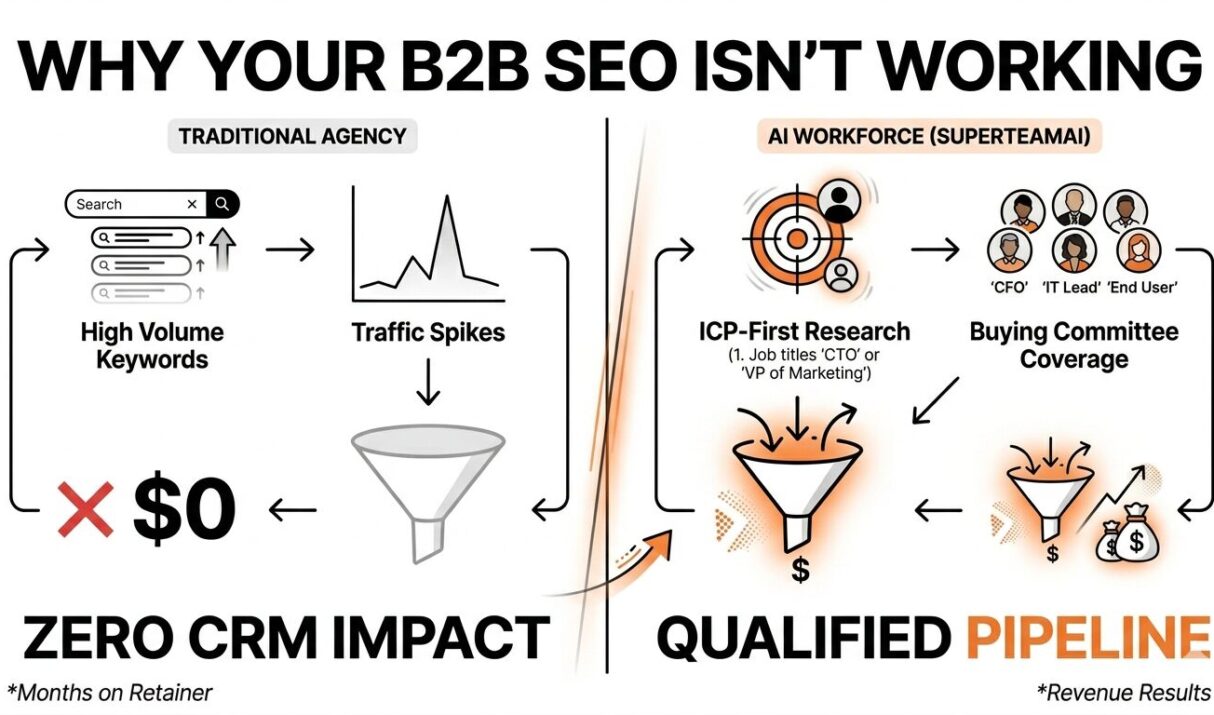

Most companies that hire a B2B SEO agency end up disappointed. Not because B2B SEO does not work, but because the agency they chose was not built for B2B. They optimised for traffic in a programme that should have been optimising for pipeline. The challenge is structural: I have seen
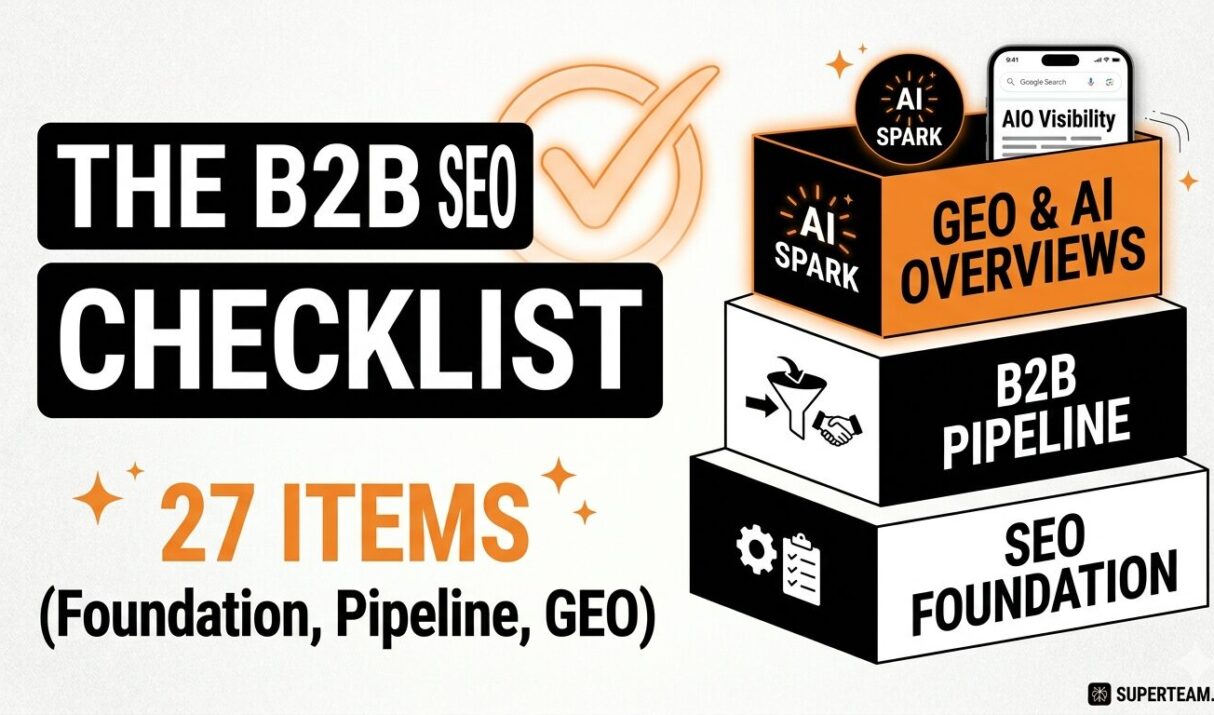
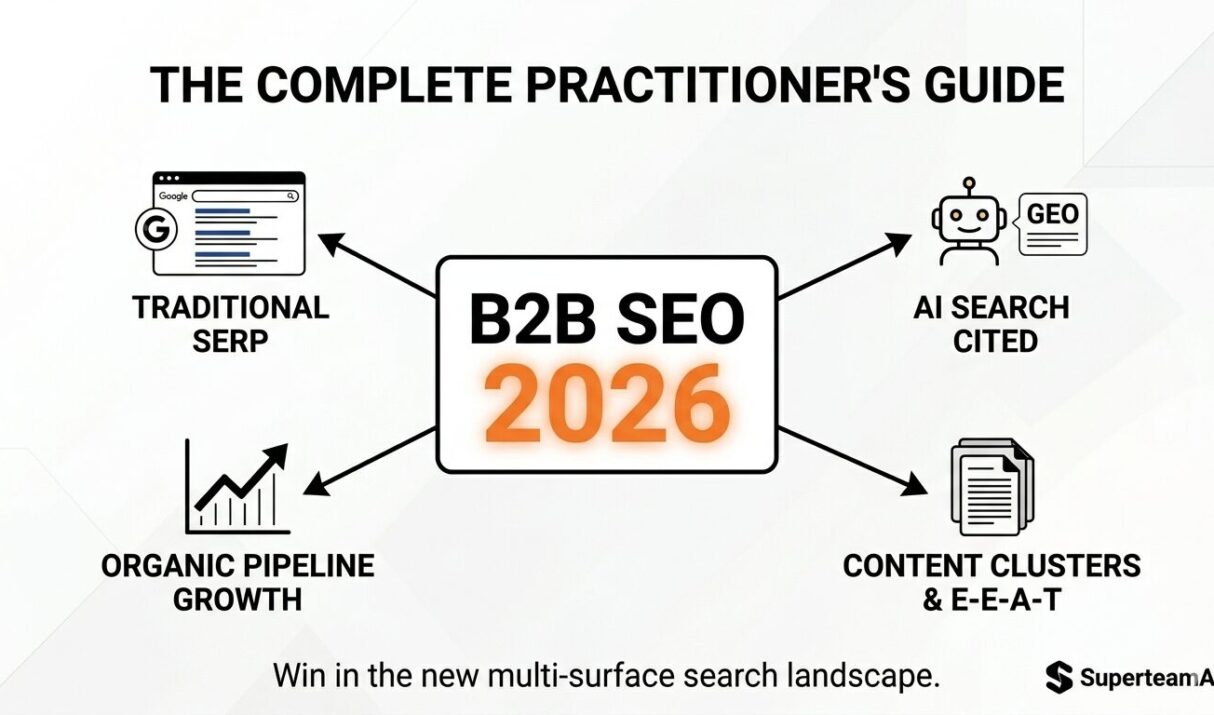
Most B2B SEO checklists are generic SEO checklists with “B2B” in the title. In my work deploying AI SEO Workforces for 50+ companies, I find the same pattern consistently: teams complete the foundation items, skip the B2B-specific pipeline layer entirely, and have never heard of the GEO tier. The result
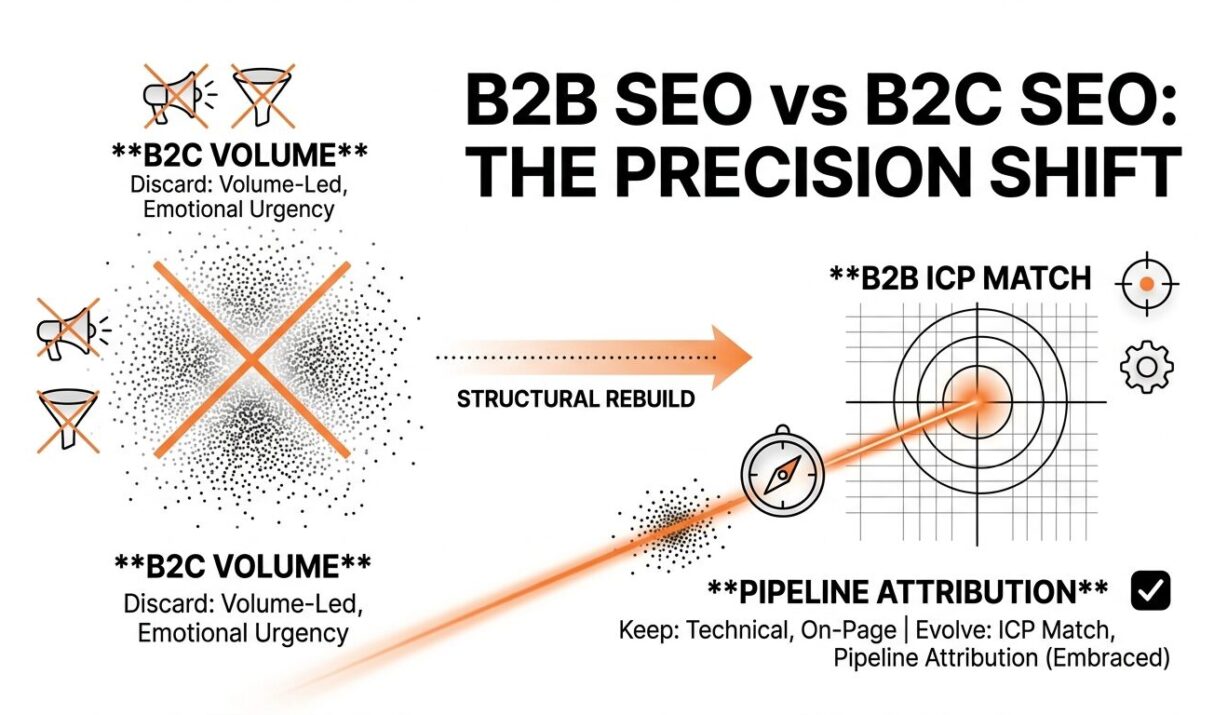
In my work building AI SEO Workforces for 50+ B2B companies, one of the costliest mistakes I see is a B2C-trained SEO or agency applying B2C strategy to a B2B context. The technical skills transfer. The framework does not. This article covers the 6 structural differences between B2B SEO and
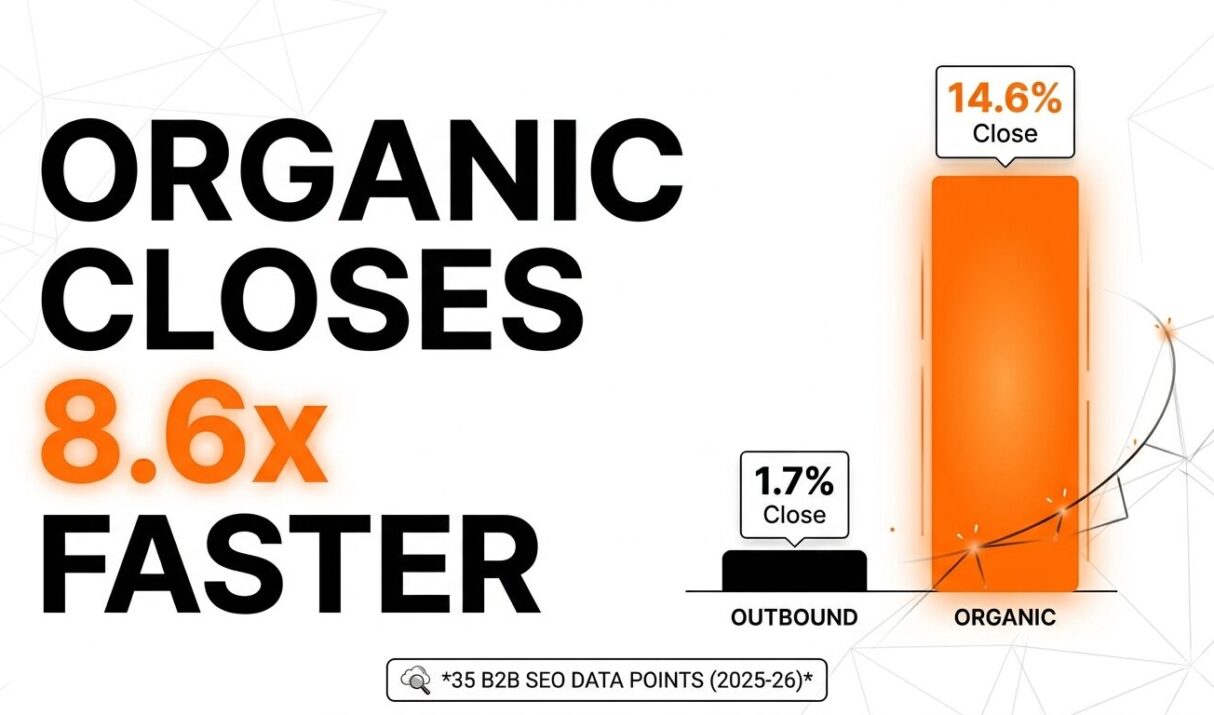
Most B2B SEO statistics articles hand you a numbered list with no context. In my experience building AI SEO Workforces for 50+ B2B companies, the numbers that change investment decisions are not the ones buried in position 31 of a listicle; they are the ones tied directly to the business
Here is something most B2B marketers discover too late: 70% of B2B buyers complete their research before speaking to a vendor. They are reading, comparing, and forming preferences on Google, and the companies ranking at the top of those searches are winning before the sales conversation even starts. The problem
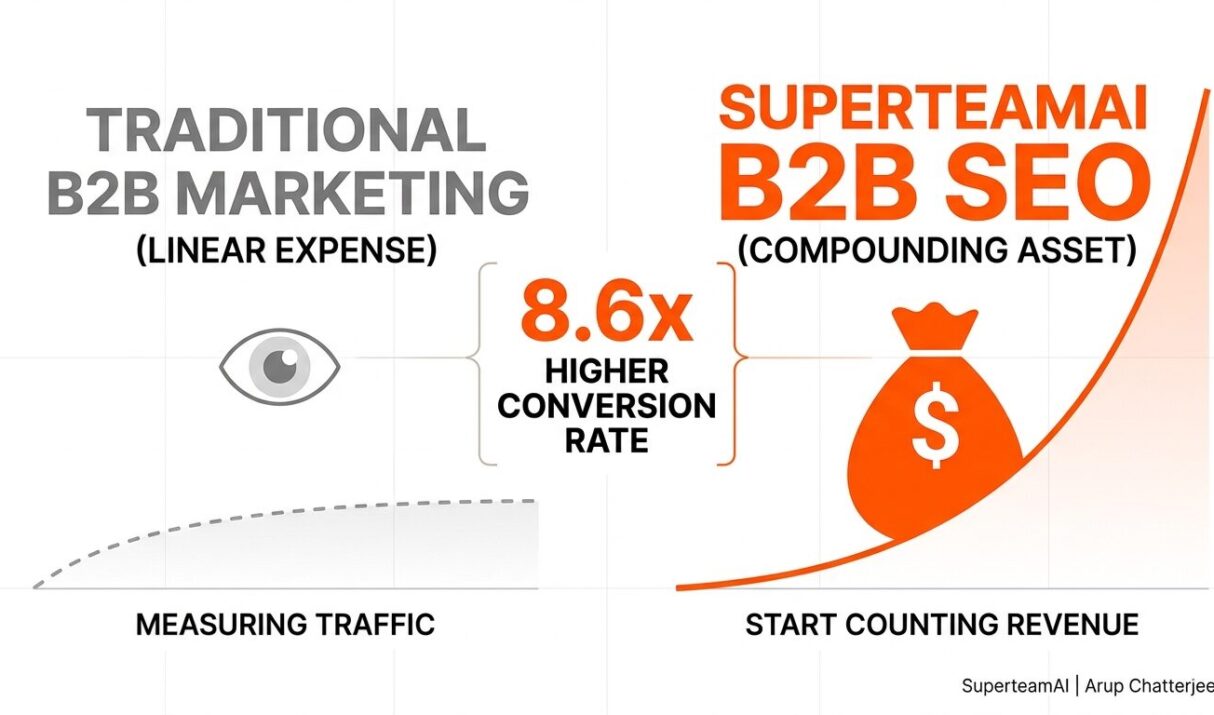
Most articles on why SEO is important for B2B companies hand you a list of traffic benefits. This article makes a different argument: B2B SEO is important because of pipeline unit economics, not traffic volume. I have built AI SEO Workforces for 50+ B2B companies, and the decision to invest
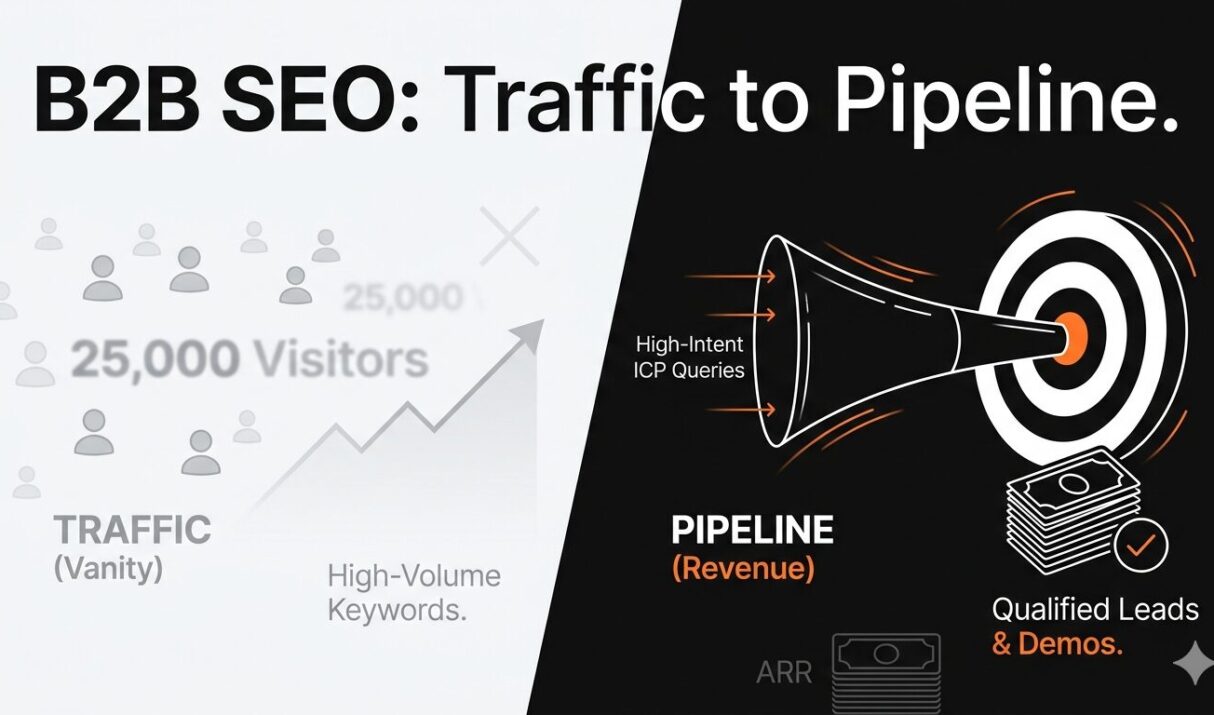
Most definitions of B2B SEO describe it as “increasing organic traffic for B2B websites.” That definition optimises for the wrong outcome. After building AI SEO Workforces for 50+ B2B companies, I have found that the teams who treat B2B SEO as a traffic channel consistently underperform the teams who treat
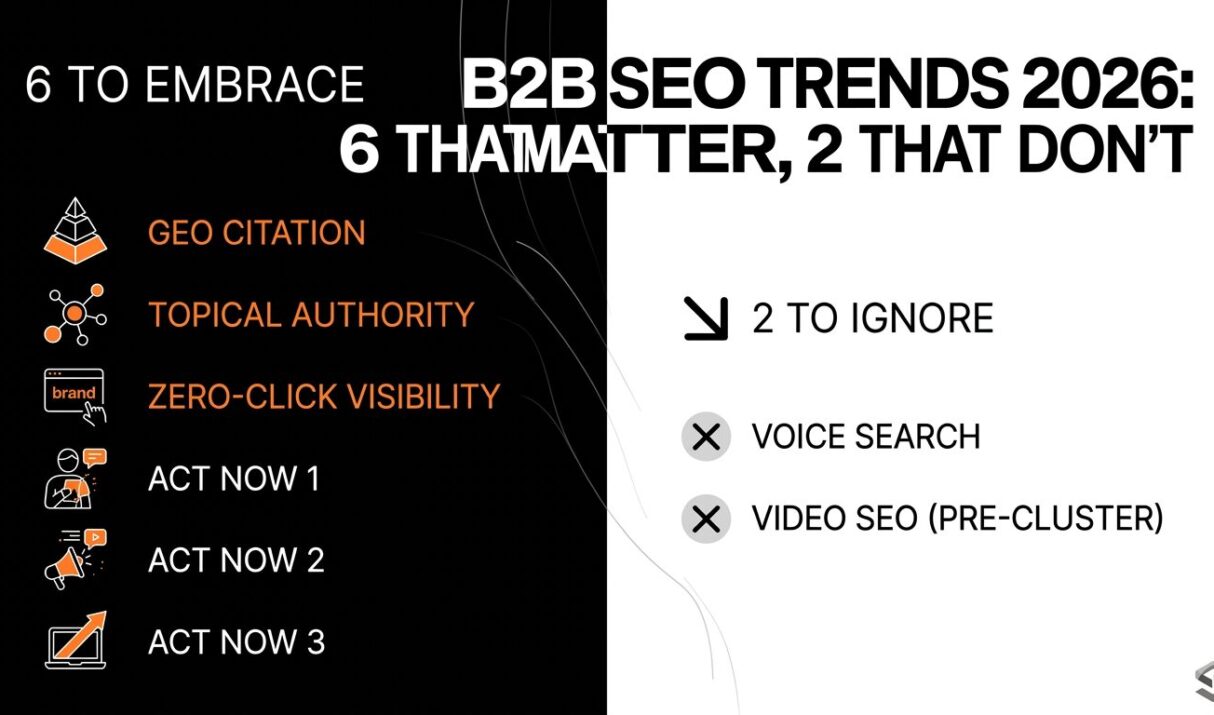
B2B SEO trends are the measurable shifts in how search engines, AI tools, and B2B buyers discover, evaluate, and engage with content. Not every shift requires a strategic response. Most trend lists treat 10 shifts as equally urgent. After building AI Workforces for 50+ businesses across B2B SaaS, services, and
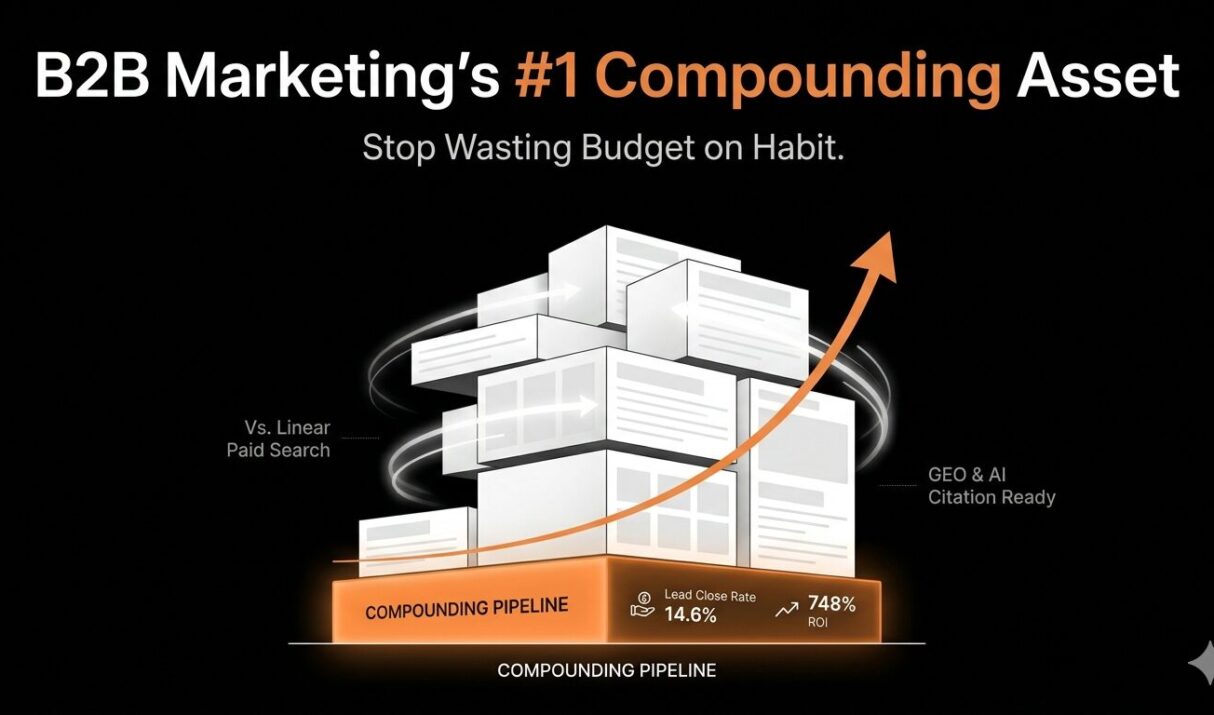
Most B2B marketing budgets are allocated by habit, not evidence. Paid search gets money because the attribution is immediate. Events get money because the CFO can see the booth. SEO gets underfunded because results take 6 to 12 months and are harder to defend in a quarterly review. Here is
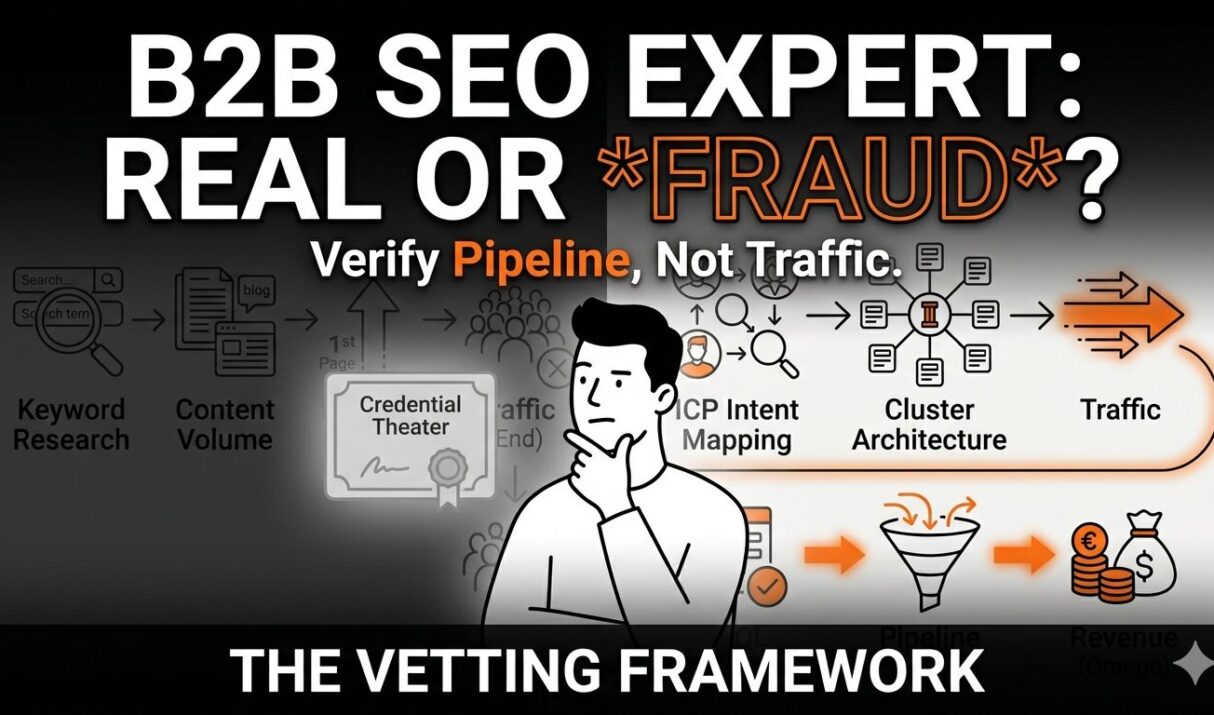
The title “B2B SEO expert” has no barrier to entry. Any freelancer can add it to their LinkedIn profile. Any agency can build a case study page. I have audited B2B companies that paid $7,000 to $10,000 per month for someone carrying the expert title and received monthly traffic reports
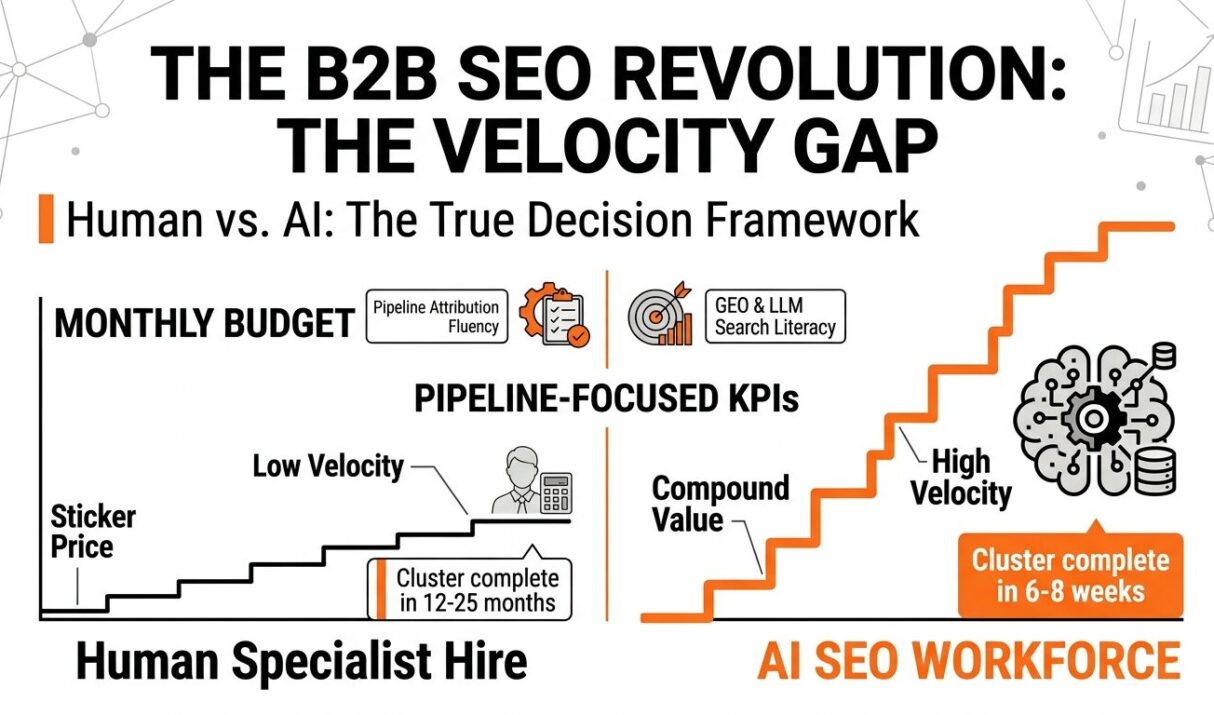
Here is the pattern I see more than any other when a B2B founder tells me their SEO investment is not working. They hired a specialist six months ago. The specialist produced a thorough audit, a keyword research deck, and a technical recommendations document. Three articles were published. Traffic has
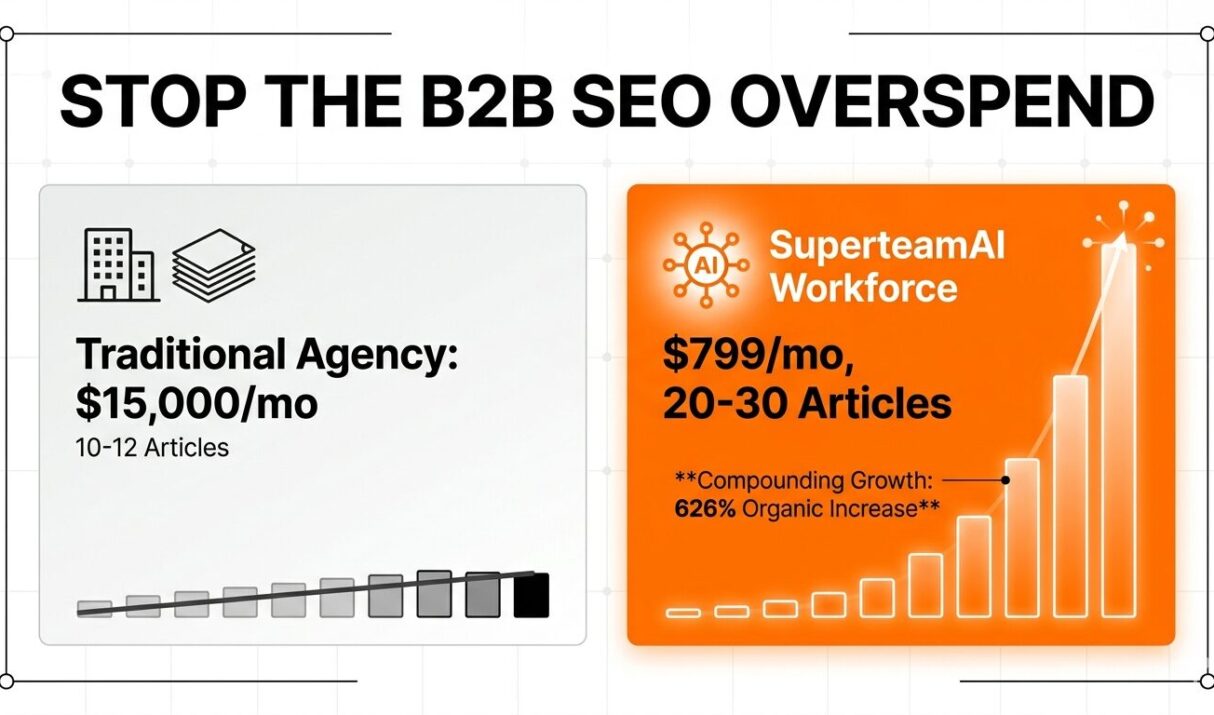
By Arup Chatterjee, Founder of Superteam AI I have watched B2B companies spend $15,000 a month on an agency to publish four articles. I have watched others buy a $99 SEO tool and produce zero articles for six months. Both are failures of matching the solution to the stage. B2B
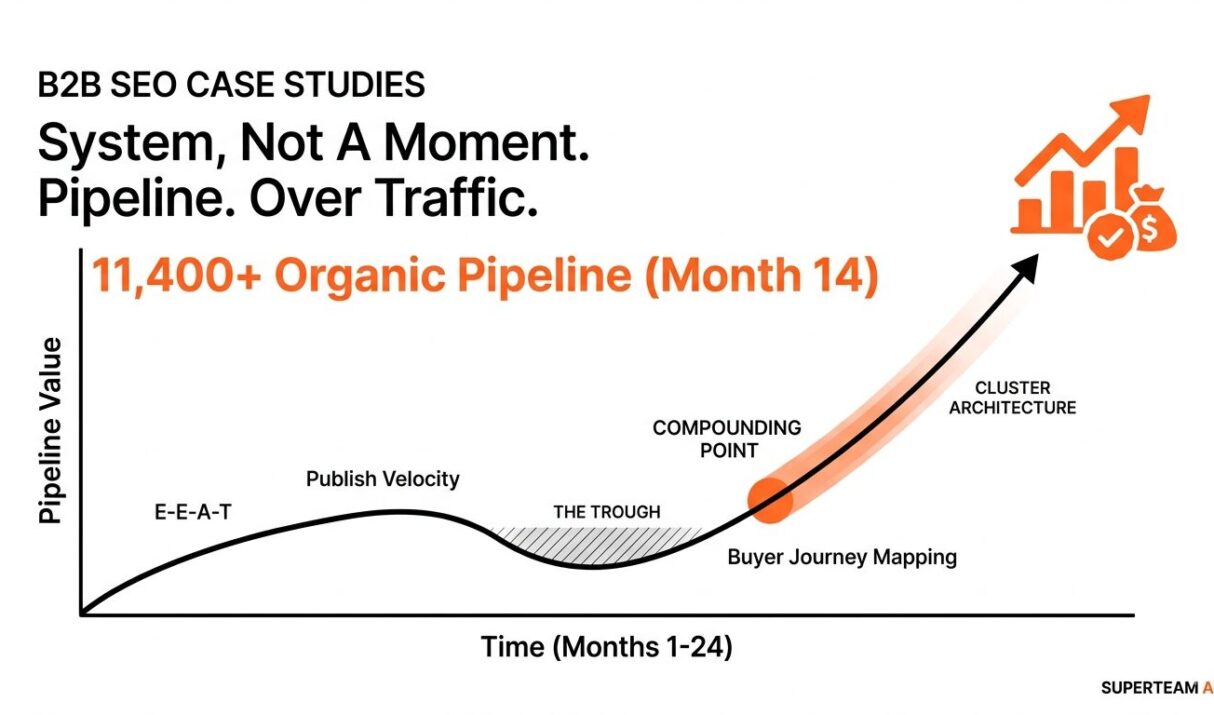
By Arup Chatterjee, Founder of Superteam AI In 14 months, one of our B2B SaaS clients went from 280 monthly organic visitors to 11,400. No paid amplification. No link-buying scheme. No viral content moment. Just a cluster architecture, consistent publishing, and a content system built around how their buyers actually
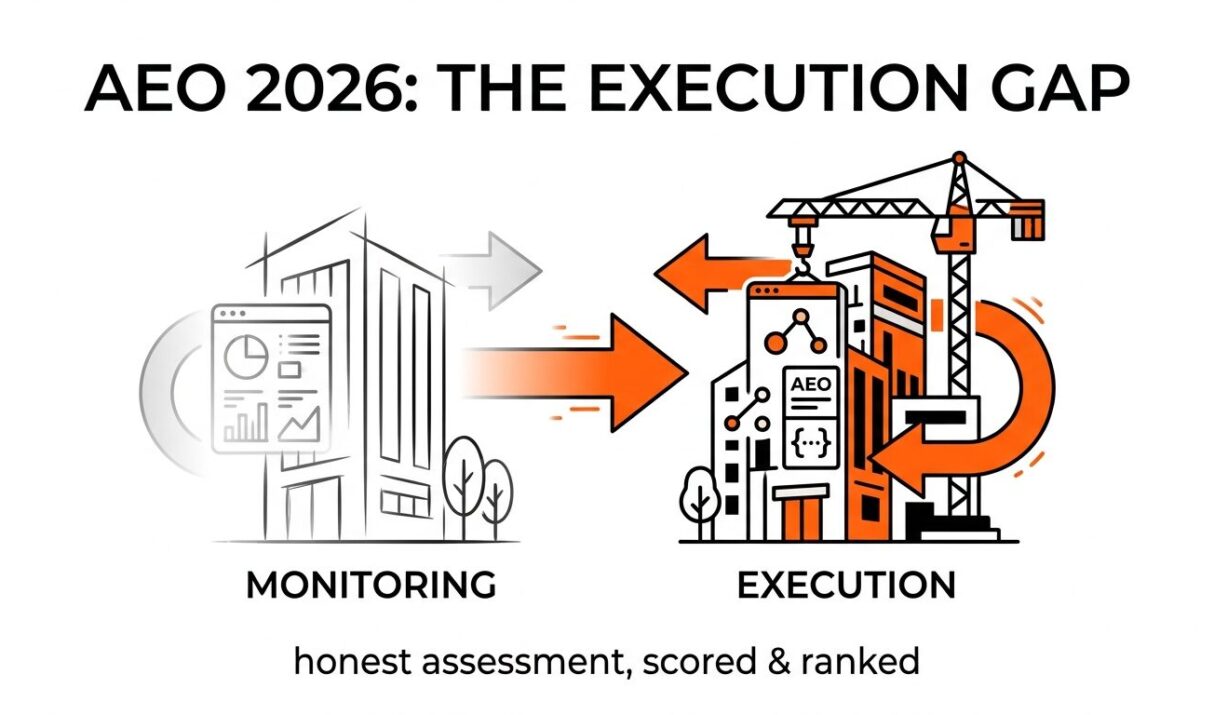
Every vendor publishing a roundup of enterprise answer engine optimization platforms puts itself at the top. Scrunch ranks Scrunch first. Profound ranks Profound first. Conductor ranks Conductor first. The enterprise buyer reading these articles is evaluating a $24,000 to $180,000-plus annual software commitment with zero independent data to work from.
Finding answer engine optimization services is easy. Finding one worth hiring is not. In 2026, every other SEO agency has relaunched as an AEO agency, and every roundup article on the topic is published by a vendor with a product to sell or an agency listing itself as the top
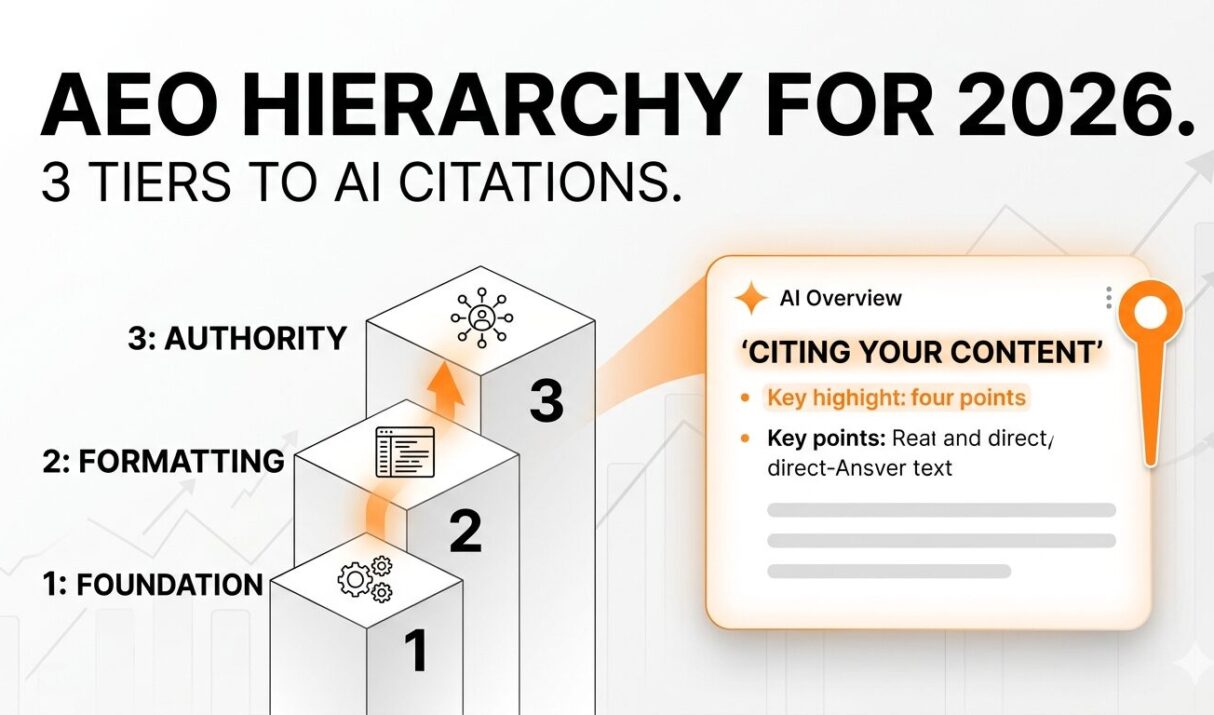
AI-driven sessions convert at 14.2% compared to 2.8% for traditional organic traffic. That gap is the commercial consequence of being the source an AI chooses to cite when a buyer asks a question. But most guides on answer engine optimization best practices leave practitioners more confused than when they started.
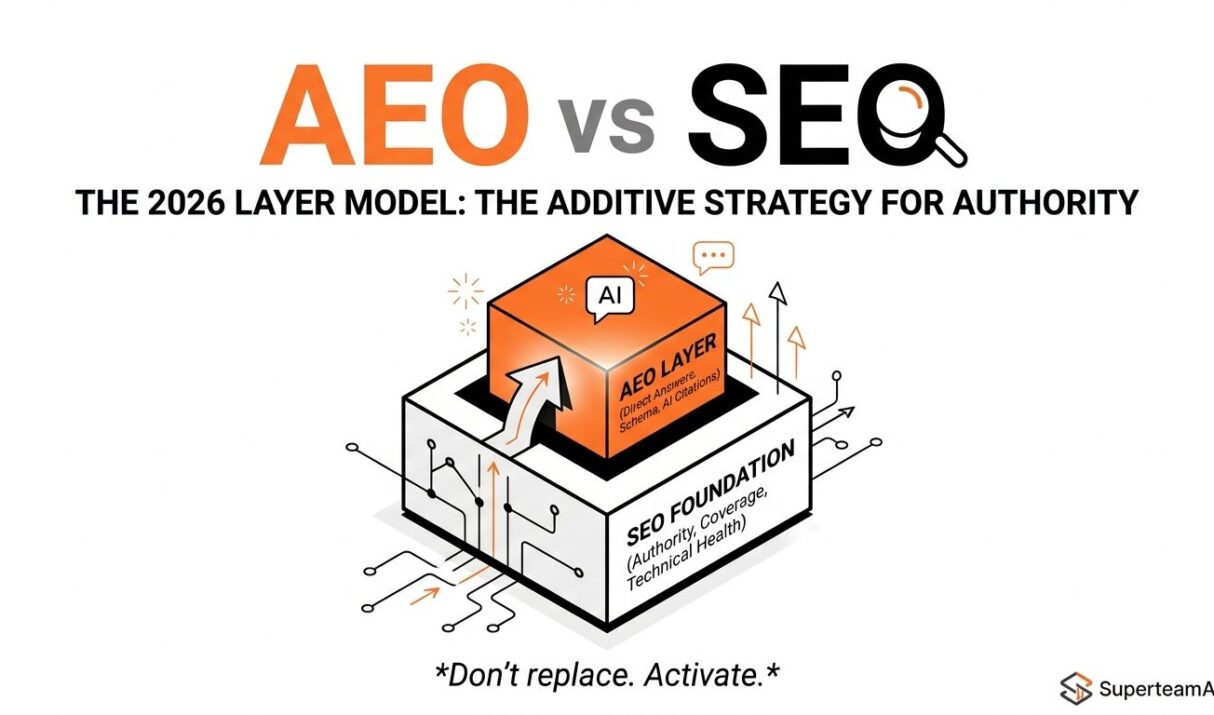
Sixty percent of searches now end without a click. That single statistic explains why answer engine optimization vs SEO has become one of the most searched questions in digital marketing in 2026, and why most brands are handling the answer wrong. The two most common mistakes: treating AEO as a
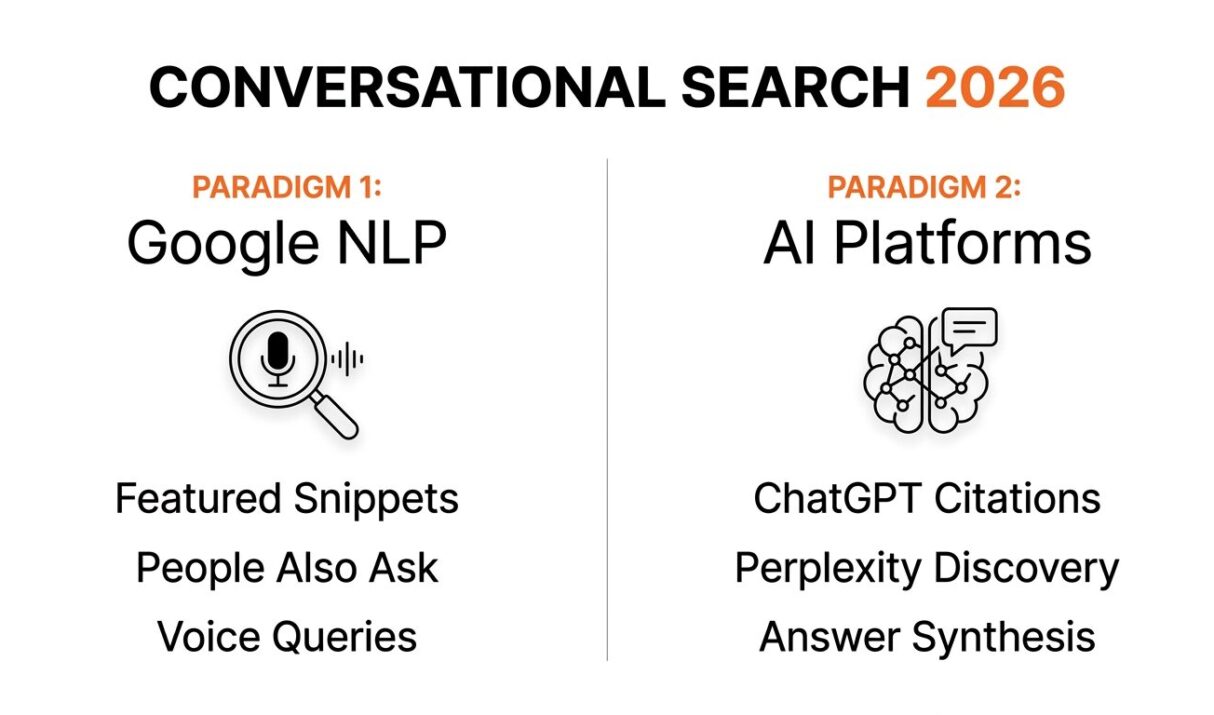
Over 60% of all searches are now conversational. At the same time, ChatGPT processes roughly 3.8 billion monthly visits, with Perplexity and Gemini adding hundreds of millions more. Most businesses are optimizing for one of these realities. The ones growing fastest are optimizing for both. The problem with almost every
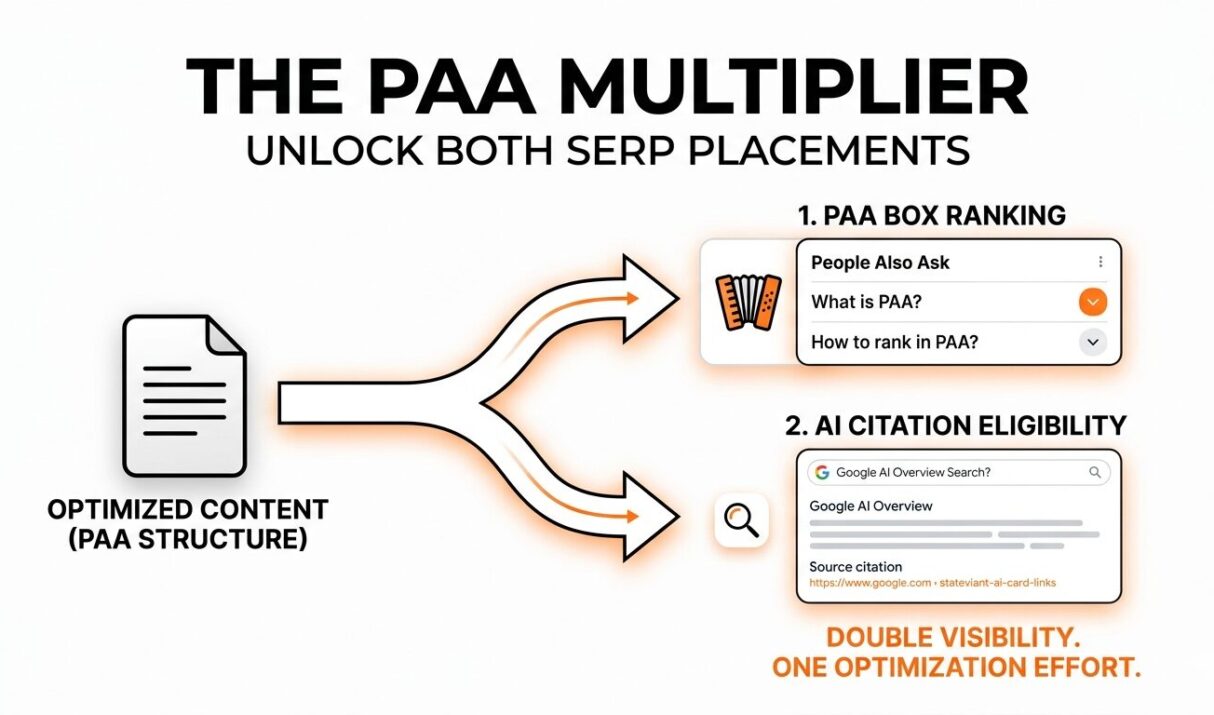
Every content audit we run surfaces the same missed opportunity. Pages ranking on page one for their target keyword have related questions stacked in the search results that they never answer. Those questions are the People Also Ask box, and the pages failing to capture them are leaving both clicks
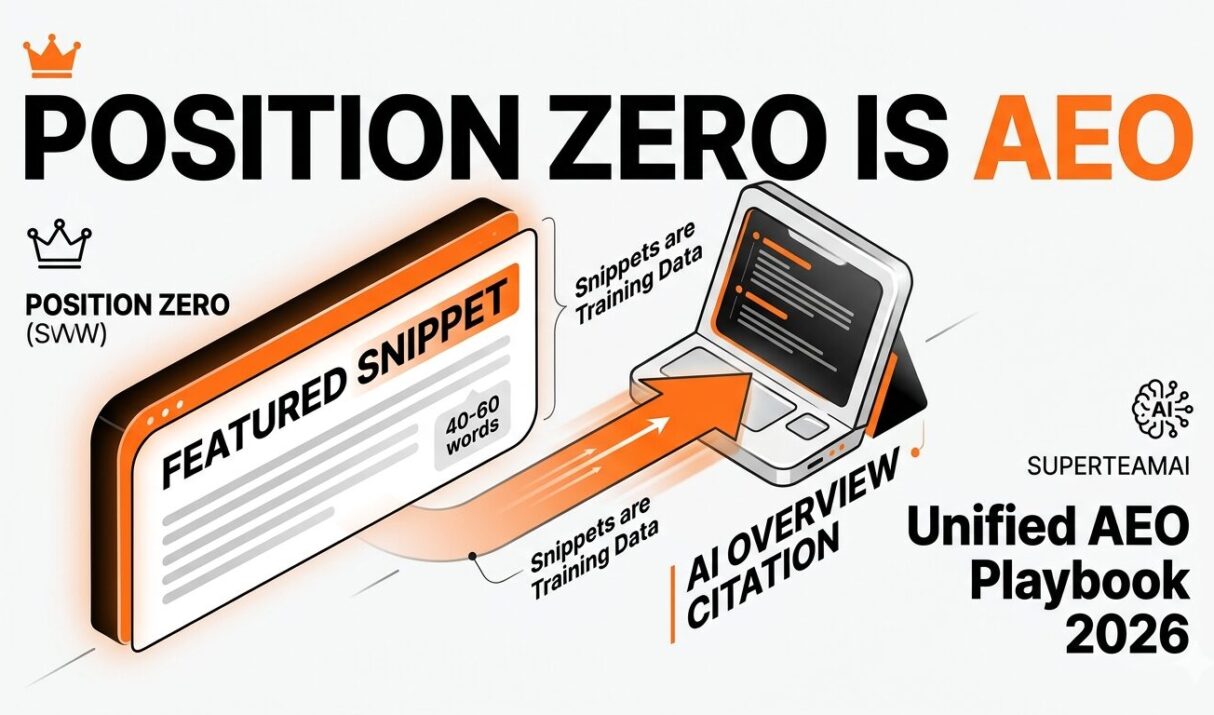
In our client content audits, the featured snippet question comes up more than any other topic right now. The concern is always the same: “Featured snippet visibility dropped massively in 2025. Should we still bother?” The short answer is yes. The longer answer is that most teams are drawing the